Thermal Burns and Hyperbaric Oxygen Therapy
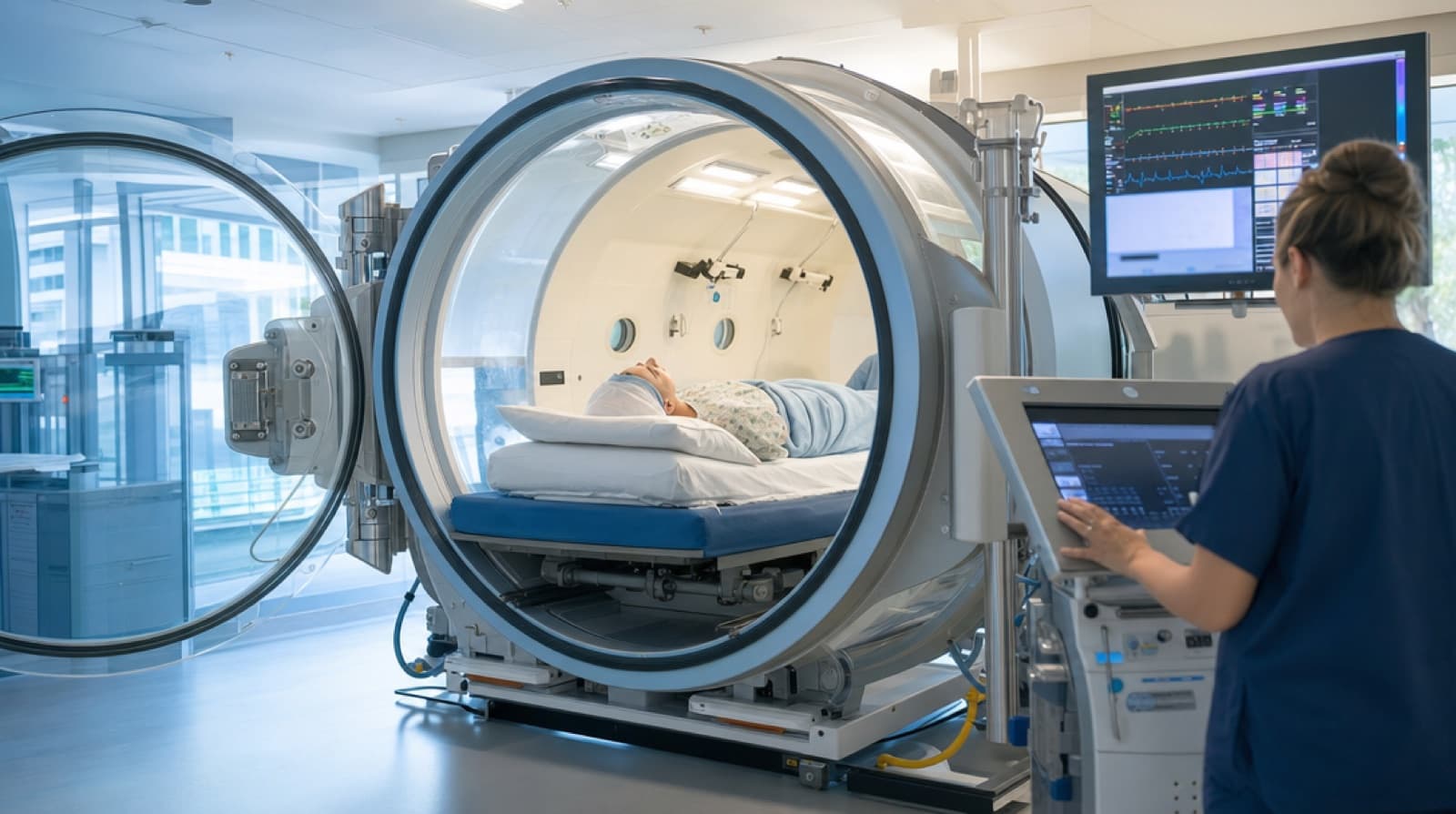
A thermal burn is tissue damage caused by heat — flame, hot liquids (scalds), steam, or contact with hot surfaces. Beyond the visible wound, a serious burn sets off a cascade of swelling, impaired circulation, and infection risk that can turn survivable injuries into life-threatening ones. Used as part of a comprehensive program, hyperbaric oxygen therapy (HBOT)can significantly improve outcomes, reduce the need for surgery, and shorten hospital stays.
How burns are classified
- Superficial (first-degree): affects only the outer skin layer — red, painful, no blisters. Heals on its own.
- Partial-thickness (second-degree): reaches deeper layers — blisters, severe pain, risk of scarring.
- Full-thickness (third-degree): destroys the full skin thickness and may reach fat, muscle, or bone; often requires grafting.
Around a burn there is often a zone of stasis — tissue that is injured but not yet dead, with borderline blood supply. Whether that zone survives or progresses to necrosis largely determines how deep the final wound becomes, and it is exactly where oxygen therapy can make a difference.
Why hyperbaric oxygen helps burn care
Burned tissue is swollen and poorly perfused, leaving cells starved of oxygen precisely when they need it most to repair. By dissolving oxygen directly into the plasma, HBOT delivers oxygen to that oxygen-deprived hypoxic zone of stasis, helping to:
- Reduce swelling (edema) by constricting overdilated vessels while maintaining oxygen delivery
- Preserve the borderline tissue in the zone of stasis, limiting how deep the burn becomes
- Support new blood-vessel growth and collagen formation for wound healing
- Enhance the body’s defense against wound infection
An adjunct, not a standalone cure
It is important to be clear: HBOT does not replace the fundamentals of burn care — fluid resuscitation, wound cleaning, infection control, skin grafting where needed, and specialist management. It is used in addition to those, in a hyperbaric chamber, when a burn team judges it likely to help. Decisions about HBOT for burns are made case by case in a specialist setting.
For detailed medical information, please consult with a qualified healthcare professional.
How grafts survive and how oxygen supports them.
The biology of repair that HBOT supports.
Hyperbaric oxygen indications and mechanisms.