Gas Gangrene (Clostridial Myonecrosis) and HBOT Treatment
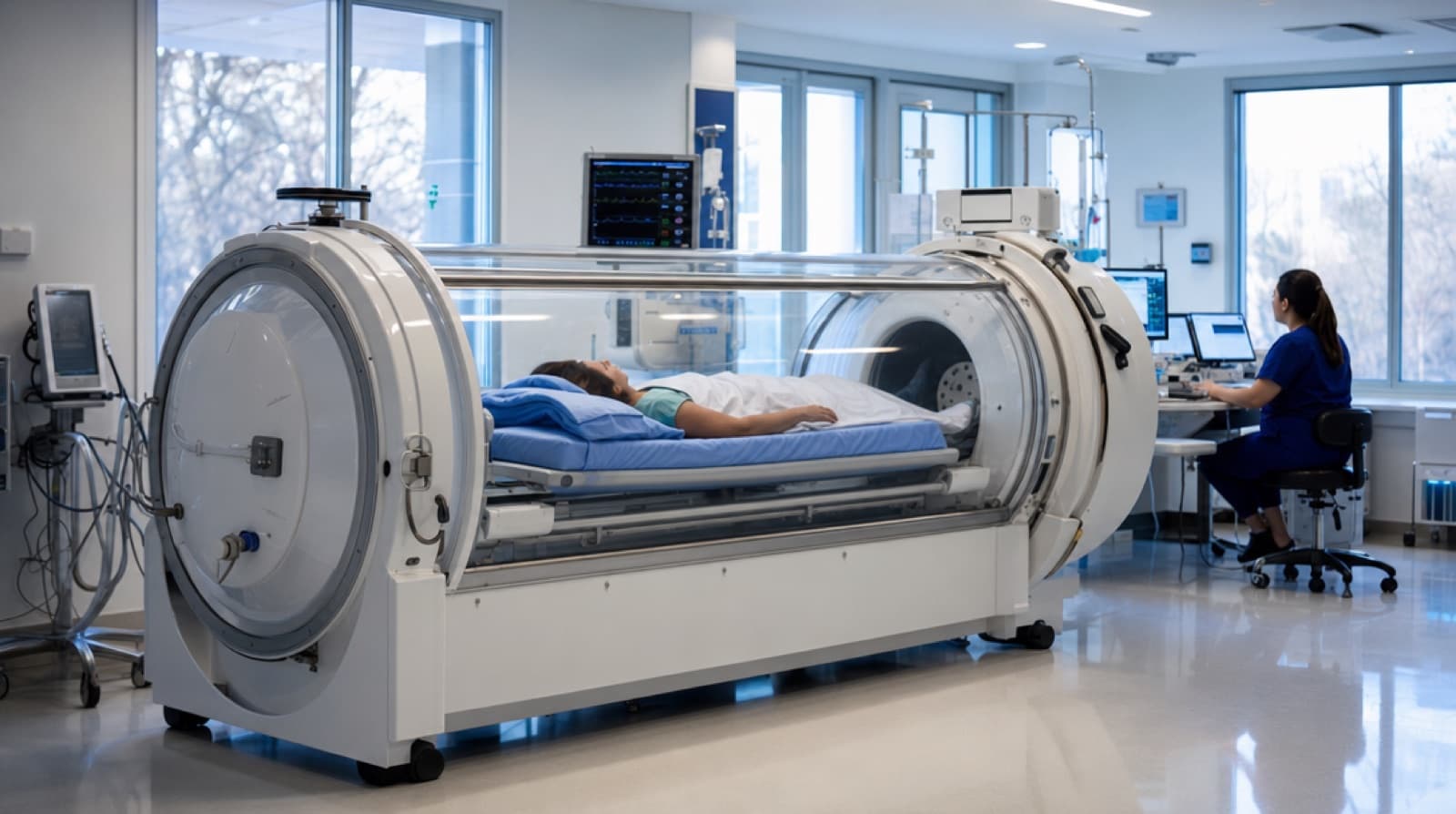
Gas gangrene, also called clostridial myonecrosis, is a severe, rapidly spreading infection of muscle tissue. It advances in a matter of hours, which is what makes it a true surgical emergency. The organisms responsible — most often Clostridium perfringens — release poisons called exotoxins that liquefy nearby tissue and disable the body’s local defenses, so the infection destroys healthy muscle in its path and produces gas within the tissue.
How gas gangrene develops
The clostridia that cause gas gangrene thrive in environments without oxygen — they are anaerobic. Deep wounds, crush injuries, and surgical sites with poor blood supply create exactly the low-oxygen, dead-tissue conditions these bacteria need. Once established, they multiply, migrate along muscle, and release exotoxins, creating a self-perpetuating cycle of tissue death and necrosis.
Symptoms to recognize
- Severe, rapidly increasing pain out of proportion to the wound
- Swelling and a feeling of gas (crackling) under the skin
- Skin that changes color to pale, then bronze, then purplish
- Foul-smelling discharge
- Fever, rapid heart rate, and signs of systemic toxicity
Because the infection moves so fast, these signs demand immediate emergency care.
Why HBOT is part of the treatment
Gas gangrene is treated with a combination of urgent surgery to remove dead tissue, high-dose antibiotics, and hyperbaric oxygen therapy (HBOT). HBOT contributes in a way antibiotics and surgery cannot: by dissolving large amounts of oxygen into the plasma and driving it into poorly perfused tissue, it makes the wound environment hostile to the anaerobic clostridia, directly inhibiting their growth. It also helps halt production of the alpha-toxin that drives the tissue destruction, and boosts the ability of white blood cells and antibiotics to kill the bacteria.
Treatment takes place in a hyperbaric chamber, often a multiplace unit so critically ill patients can be monitored by staff inside. HBOT does not replace surgery or antibiotics — it works alongside them, and the combination gives the best chance of saving both tissue and life.
For detailed medical information, please consult with a qualified healthcare professional.
How and why tissue dies — central to gangrene.
Hyperbaric oxygen indications and mechanisms.
How oxygen supports healing of damaged tissue.