HBOT and Longevity in 2026: What the Research Actually Shows
Key takeaways
- HBOT is FDA-approved for wounds, infections and decompression illness — not for aging.
- Small 2020–2026 trials report changes in telomere length, senescent-cell counts and cerebral blood flow after repeated sessions.
- The proposed mechanism is the 'hyperoxic-hypoxic paradox': oxygen swings trigger repair pathways without sustained toxicity.
- Evidence is early: small samples, weak blinding, surrogate endpoints. No trial yet shows people live longer or better.
- Mild consumer chambers (1.3 ATA) deliver a far smaller dose than the clinical 2.0 ATA protocols used in studies.
In this article
Hyperbaric oxygen therapy (HBOT) started life as a treatment for decompression sickness and stubborn wounds. In 2026 it keeps showing up in a very different conversation: longevity and healthy aging. Podcasters call it a fountain of youth; regulators call it a therapy for a specific list of conditions. So which is it? Here is what the current evidence actually supports — and where the hype runs ahead of the data.
What is HBOT, in one paragraph
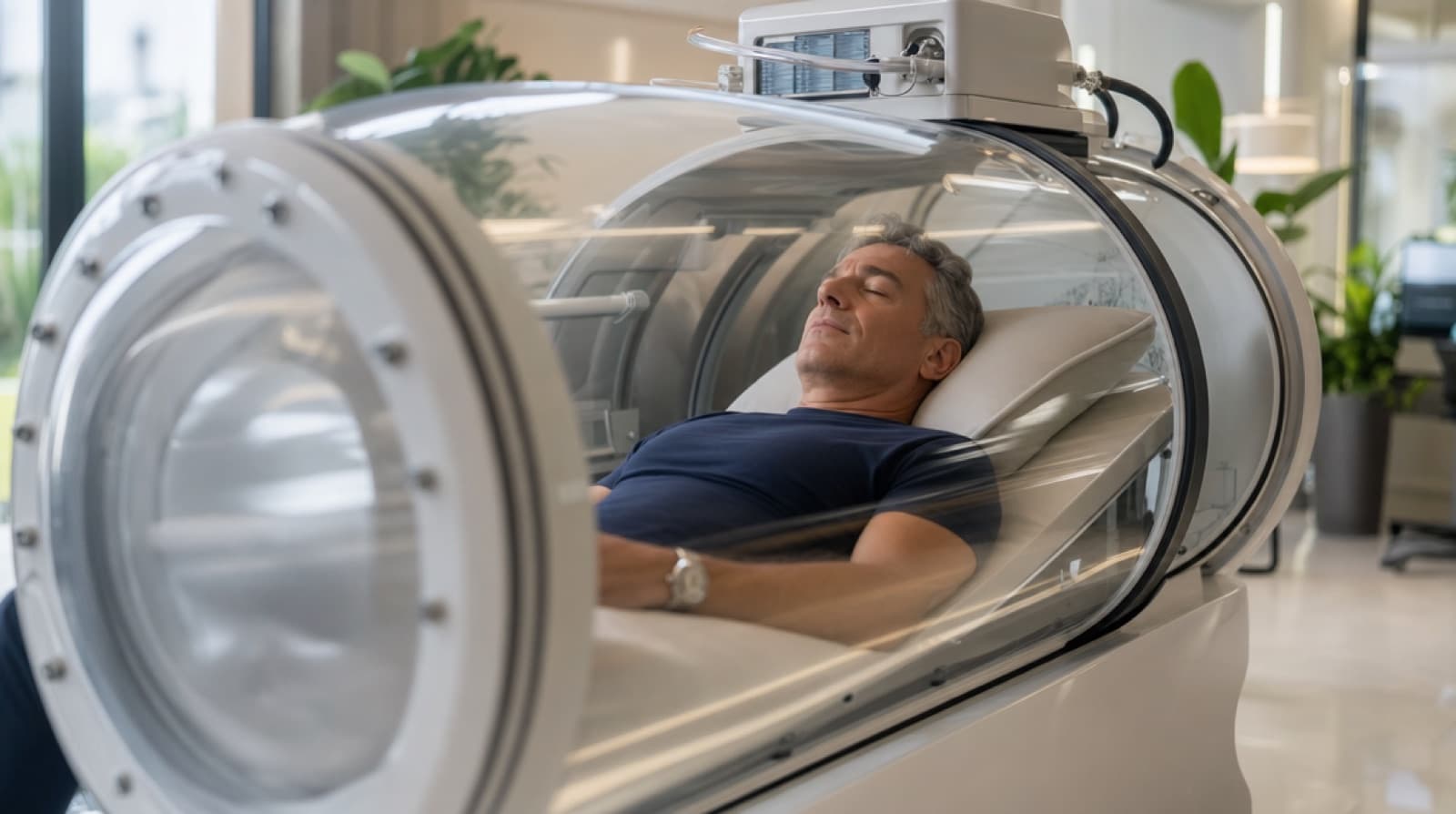
HBOT means breathing near-100% oxygen inside a pressurized hyperbaric chamber, usually at 2.0–3.0 times normal atmospheric pressure. That pressure dissolves far more oxygen directly into blood plasma than breathing air ever could, driving oxygen into tissues that normal circulation struggles to reach. That single mechanism explains its established uses in wound healing, carbon monoxide poisoning and decompression sickness — and it is the starting point for the longevity hypothesis too.
Why longevity researchers got interested
The aging angle rests on a counterintuitive idea sometimes called the hyperoxic-hypoxic paradox. Repeatedly swinging between high oxygen and a return to normal levels appears to make the body react as if it were oxygen-starved — switching on the same repair and regeneration pathways that low oxygen would, but without the damage. In theory, that controlled stress could nudge cells toward renewal instead of decline.
Three research threads have formed around this idea:
- Cellular aging markers. Small studies have measured telomere length (the protective caps on chromosomes) and the number of senescent "zombie" cells in blood before and after a course of HBOT, reporting movement in a favorable direction.
- Brain aging and cognition. Work using brain perfusion imaging has looked at cerebral blood flow and memory scores in older adults.
- Physical recovery. The same mitochondrial and anti-inflammatory effects that made HBOT popular for athletic recovery are being examined in the context of age-related decline.
What the evidence really shows
Here is the honest read. The direction of these findings is genuinely interesting, but the studies behind them are mostly small, short, and hard to blind. A patient almost always knows whether a chamber is pressurizing, which makes a convincing placebo group difficult. And nearly every positive result is a surrogate endpoint — a biomarker moved — rather than a hard outcome like "these people stayed healthier for longer."
That distinction matters enormously in longevity science, a field littered with interventions that improved a lab value and then did nothing for actual healthspan. A change in telomere length is a hypothesis generator, not a finish line.
Dose is the detail everyone skips
There is also a practical trap for consumers. The studies generating headlines use clinical-grade protocols around 2.0 ATA. The chambers most people can actually buy for home use are mild "soft-shell" units at 1.3–1.5 ATA — a substantially smaller physiological dose. Reading a 2.0 ATA study and then buying a 1.3 ATA bag is not the same experiment. Anyone weighing home use should first understand the difference between chamber types and involve a physician, because even mild pressure carries real contraindications.
What to watch next
The results worth waiting for are adequately powered, sham-controlled trials that report functional outcomes — cognition, frailty, disease incidence — not just biomarkers. A handful are underway. Until they read out, the most accurate way to describe HBOT and longevity is: a serious, biologically plausible hypothesis under active investigation, not a validated anti-aging protocol.
That is a more boring sentence than "reverse your biological age in 3 months." It is also the one the evidence can currently back up.
Frequently asked questions
Is hyperbaric oxygen therapy proven to extend lifespan?
No. As of 2026 no controlled trial has shown that HBOT extends human lifespan. Studies report changes in biomarkers such as telomere length and senescent-cell counts, but biomarker changes are not the same as living longer or healthier. Longevity is not an FDA-approved indication for HBOT.
What pressure is used in HBOT longevity studies?
Most longevity-oriented studies use clinical protocols around 2.0 ATA (atmospheres absolute) breathing 100% oxygen, typically 60–90 minutes per session across 40–60 sessions. This is a much larger dose than the 1.3–1.5 ATA delivered by mild 'soft-shell' consumer chambers.
Is HBOT safe for healthy people?
HBOT has a well-characterized safety profile but is not risk-free. Ear barotrauma is the most common side effect, and there are real contraindications such as untreated pneumothorax and certain medications. Anyone considering HBOT for wellness should be screened by a physician familiar with hyperbaric medicine.
Sources
This article summarizes published research and news for informational purposes only and is not medical advice. Consult a qualified healthcare professional before making health decisions.